Boost Brainpower
In our latest episode, we delve into the intricate world of toxic relationships with licensed clinical professional counselor, Maria Shenkman. Drawing upon her extensive expertise in Dialectical Behavioral Therapy (C-DBT) and Mindfulness-Based Cognitive Therapy (MBCT), Shenkman provides invaluable insights into recognizing toxic behaviors and equipping oneself against their detrimental impacts.

Hosted by yours truly, Kristina Lufian, this episode addresses pressing questions many of us grapple with in the face of toxic interactions. From recognizing toxic behaviors to implementing effective coping mechanisms, Shenkman shares practical advice informed by her wealth of experience and training.

“I have worked in a variety of professional settings, providing therapeutic services in community outreach centers, schools, nonprofit organizations, executive counseling settings as well as private practice. My clinical focus includes adults, adolescents, families, and older adults. I believe in creating a supportive environment, bringing innovative solutions, and providing practical feedback to meet the unique needs of clients in individual and group settings. I base my approach on expanding self-awareness and facilitating change. In my work, I incorporate evidence-based mindfulness practices as well as mainstream psychotherapy approaches.”

-Maria Shenkman

Join Maria for a cup of coffee in Kristina’s living room and empower yourself against toxic influences. Leave your questions or suggestions in the comments below and subscribe to our channel.

“The methods I use are directed toward helping clients learn to understand themselves comprehensively and lead more functional, conscious, and productive lives. I implement an eclectic therapeutic style. I believe that change is possible for every client and incorporate individualized treatment methods addressing the unique needs of each client. My areas of interest include helping clients who present with depression, stress-related issues, anxiety, trauma, impulse control issues, behavioral problems, relationship issues/abuse, and parental difficulties. My mission is to empower individuals to discover their values and build skills and confidence that will aid them in creating a positive trajectory for change.”

-Maria Shenkman

You May Also Like, Watch Next

Boost Brainpower
Procrastination, the timeless foe of productivity, has plagued individuals across time and disciplines. However, as we delve into the realms of psychology and neuroscience, groundbreaking studies illuminate the path to liberation from this productivity thief.

Understanding the Enemy: The Psychological Perspective

Dr. Piers Steel, a renowned psychologist and author of “The Procrastination Equation,” unravels the mysteries behind procrastination. His research reveals that procrastination is not merely a lack of willpower but a complex interplay of factors, including our perception of the task, its value, and the time required. Acknowledging these psychological nuances is the first step to overcoming procrastination.

The Pomodoro Technique: A Time-Tested Ally

Francesco Cirillo’s Pomodoro Technique is a beacon of hope for those ensnared by procrastination. Based on the principle of breaking tasks into focused, time-limited intervals (usually 25 minutes), this method leverages the brain’s capacity for sustained focus. The periodic breaks not only combat mental fatigue but also transform daunting tasks into manageable sprints, fostering a sense of accomplishment.

The Power of Visualization: A Neuroscientific Approach

Dr. Heidi Grant Halvorson, a motivational psychologist, emphasizes the impact of visualization on goal achievement. Neuroscientific studies demonstrate that vividly imagining the process of completing a task activates the brain’s reward system. This, in turn, fuels motivation and reduces the psychological barriers that often lead to procrastination.

Cultivating a Growth Mindset: The Carol Dweck Method

In her groundbreaking work on mindset, Dr. Carol Dweck introduces the concept of a growth mindset. Embracing challenges as opportunities for growth, rather than insurmountable obstacles, is a powerful antidote to procrastination. Individuals with a growth mindset perceive effort as a path to mastery, thereby fostering resilience and perseverance in the face of tasks that may trigger procrastination.

Mindfulness Meditation: Taming the Procrastination Beast

Researchers at the University of Waterloo discovered that mindfulness meditation significantly reduces procrastination. Mindfulness, with its focus on the present moment, helps individuals detach from the anxiety associated with future tasks. By cultivating mindfulness, one can create mental space for clarity, making it easier to tackle tasks without succumbing to procrastination.

Breaking free from procrastination involves a multi-faceted approach, drawing on insights from psychology and neuroscience. By understanding the underlying psychological dynamics, adopting effective time management techniques, leveraging visualization, fostering a growth mindset, and embracing mindfulness, individuals can reclaim their productivity and pave the way toward realizing their dreams. Armed with these scientifically proven methods, the journey from procrastination to productivity becomes an empowering and transformative endeavor. The key lies not in avoiding tasks but in approaching them with intention, focus, and a belief in the untapped potential within each of us.
Boost Brainpower

The ability to speak multiple languages has always been an asset, enabling communication with a wider range of people and cultures. However, research has shown that bilingualism offers not only linguistic advantages but also significant cognitive benefits that can positively impact various aspects of your life. In this article, we will explore the fascinating world of bilingualism and how learning and speaking multiple languages can boost cognitive function and problem-solving skills.

The Bilingual Advantage

Enhanced Cognitive Control

One of the most remarkable cognitive benefits of bilingualism is improved cognitive control. Cognitive control involves processes such as selective attention, inhibitory control, and working memory—essential skills for problem-solving and decision-making.

Research conducted by Ellen Bialystok, a pioneer in the field of bilingualism, has demonstrated that bilingual individuals consistently outperform monolinguals in tasks that require attention, inhibition of irrelevant information, and cognitive flexibility. This heightened cognitive control can be attributed to the constant need for bilinguals to switch between languages, making their brains more adept at managing conflicting information and controlling their thought processes.

Improved Problem-Solving Skills

Bilingual individuals tend to excel in problem-solving due to their enhanced cognitive control. The ability to shift between languages and navigate the nuances of multiple linguistic systems can foster creative thinking and novel approaches to challenges. Bilinguals often display increased adaptability and creativity when facing complex problems.

Delayed Cognitive Decline

Studies have indicated that bilingualism may delay the onset of age-related cognitive decline and the symptoms of neurodegenerative diseases like Alzheimer’s and dementia. The cognitive advantages developed through bilingualism, such as enhanced executive functions and cognitive reserve, may contribute to this protective effect on the brain.

The Mechanisms Behind Bilingualism's Cognitive Benefits

Cognitive Reserve

Bilingualism may contribute to the concept of “cognitive reserve,” which suggests that a greater cognitive capacity helps the brain withstand the effects of aging and brain-related diseases. Bilingual individuals have effectively trained their brains to be more resilient and adaptive.

Neuroplasticity

The brain’s remarkable ability to adapt and reorganize itself, known as neuroplasticity, is highly engaged in bilingual individuals. Learning and navigating multiple languages stimulate various regions of the brain, promoting structural and functional changes that enhance cognitive performance.

Increased Grey Matter

Recent neuroimaging studies have shown that bilingualism can lead to increased grey matter in areas associated with language and cognitive control. This physical change in the brain supports the notion that learning and speaking multiple languages shape cognitive abilities.

Practical Implications of Bilingualism

The cognitive benefits of bilingualism extend beyond the academic realm and into everyday life. Bilingual individuals may find themselves more skilled in multitasking, better decision-makers, and more adept at navigating diverse cultural contexts. They may also experience heightened problem-solving abilities and a more agile mind, which can lead to success in various professional fields.

Practical Exercises to Boost Bilingualism and Cognitive Skills

1. Language Switching Practice

Learning to switch between languages effectively is a core skill in bilingualism. Choose a simple conversation or a paragraph of text in one language and translate it into your second language. Repeat this exercise regularly to improve your ability to switch between languages seamlessly.

2. Cognitive Control Games

Engage in cognitive control games and exercises to enhance your attention, inhibition, and working memory. Sudoku puzzles, crossword puzzles, and brain-training apps like Lumosity can be valuable tools to sharpen these cognitive functions.

3. Multitasking Challenge

Practice multitasking in a bilingual context. For example, listen to a podcast or watch a video in one language while taking notes or summarizing the content in your second language. This exercise helps you develop multitasking skills while using both languages.

4. Problem-Solving in Bilingual Contexts

Deliberately tackle problems in a bilingual context. For instance, when working on a complex task, brainstorm and write down ideas in one language, and then analyze and refine them in your second language. This exercise can stimulate creative problem-solving abilities.

5. Memory Enhancement through Vocabulary

Boost your memory and vocabulary by learning new words in both languages. Create flashcards with a word in one language on one side and its translation in the second language on the other. Review these flashcards regularly to strengthen your memory and language skills simultaneously.

6. Cultural Immersion

Immerse yourself in the cultures associated with your languages. Watch movies, read books, and follow news from regions where your languages are spoken. Understanding cultural nuances can deepen your linguistic and cognitive grasp of both languages.

7. Language Journaling

Keep a journal in which you write daily entries in both of your languages. Share your thoughts, experiences, or reflections in one language and then translate them into the other. This exercise reinforces your language skills and encourages cognitive flexibility.

8. Diverse Language Contexts

Use your bilingualism in a variety of real-life contexts. Engage in debates, discussions, or community activities where both languages are spoken. This will expose you to different registers and dialects, further enriching your language proficiency.

9. Memory Games in Both Languages

Play memory-boosting games, such as “Simon says,” “I spy,” or memory card games, in both languages. This exercise can enhance working memory and cognitive control while reinforcing vocabulary.

10. Regular Language Practice

Consistency is key to maintaining and enhancing your bilingualism. Dedicate specific times each day to practice both languages, whether through conversation, reading, or writing. Over time, you’ll notice improvements in cognitive control and problem-solving abilities.

Incorporating these practical exercises into your daily routine can help you fully reap the cognitive benefits of bilingualism. By actively engaging with these activities, you’ll not only enhance your language proficiency but also sharpen your problem-solving skills, cognitive control, and overall cognitive abilities. Bilingualism is a journey that continually unfolds, and these exercises will aid you in making the most of it.

Conclusion

Bilingualism is not just a linguistic talent; it’s a cognitive advantage with far-reaching implications. The ability to speak and think in multiple languages enhances cognitive control, problem-solving skills, and offers protection against cognitive decline. Embracing bilingualism or learning a second language is not only a personal and cultural enrichment but also a valuable investment in your cognitive abilities and overall well-being. So, if you’ve ever contemplated learning a new language, now is the time to embark on a journey that will not only broaden your horizons but also empower your mind.

Boost Brainpower Magazine Articles
Have you ever taken an IQ test? If not, you probably should take a little more interest in your IQ level. According to Ken Richarpeople’s and Sarah H. Norgate’s research, people with higher IQ tend to be more successful at work. 

Although IQ is not the only factor that defines your exceptional job performance, it’s still one of the most important things employers look at. After all, the higher one’s IQ is, the better the reasoning and problem-solving skills they have. What employer wouldn’t want that? 

Less than 1% of people get to be called “very gifted”, meaning they scored 140 points or more on an IQ test. Around 51% of people on the planet have average intelligence (90-110). The good thing is, anybody’s brain can be trained. 

So, here are 5 effective exercises you can do to boost your cognitive abilities:

1. Learn both poetry and prose

Nowadays rote learning is perceived as an antonym to so-called “meaningful learning”. But don’t be fooled: simple old-fashioned memorization can truly boost your brain function. According to career educator Ben Jonson, a brain is a learning tool, and it requires active effort to push things into short-term memory.

It takes even more work to memorize information long-term. Irish research showed that learning by repetition improves neuronal plasticity in the brain since it activates memory structures in the hippocampal foundation.

2. Take Up Basic Neurobics

Neurobics includes a great deal of non-routine exercises that can keep your brain fit. Most exercises require breaking a pattern and doing common things the hard way, helping you build new neural pathways. They can be as simple as shopping at a new store, changing your usual way of working or taking a shower with your eyes closed.

What does it have to do with anything? According to the co-creator of this term Lawrence Katz, Ph.D., neurotics can prepare our brain for meeting various challenges whether it’s memorizing someone’s name, fulfilling creative tasks at work or mastering a new computer program.

3. Start Meditating

It’s hard to believe that being so still can actually improve your brain activity. However, a 2010 study by a group of American neurobiologists and psychologists says that meditating for just 20 minutes a day can improve your fluid intelligence. Fluid intelligence stands for the ability to solve problems and find new logical ways to deal with day-to-day situations. To get better at those, you have to meditate regularly.

4. Learn To Play A Musical Instrument

Music can stimulate your brain function in a unique way because you develop an emotional connection with it, says a neuropsychologist at the University of Westminster, Catherine Loveday. While playing a musical instrument, a person engages multiple senses (like vision, hearing and touch) to perceive information.

That’s why learning to play a musical instrument increases grey matter volume in different regions of the brain. Studies by German neurologists have shown that regular and intensive music training can even impact brain structure, enlarging certain parts.

Learn how to boost your brainpower with music in the Lufian Magazine Issue No.6.

5. Carry On With A Life-Long Education

It’s highly recommended for young adults to stay at school as long as possible. Studies have shown that each year of school gives you on average 3,5 additional IQ points. However, even if you’re out of college, it doesn’t mean you have to stop learning. Take up informal education: take a professional course once in a while, read books or watch shows related to your field and choose a mentally challenging career.

There are hundreds of various IQ tests on the Internet. However, most of them are only there to obtain web traffic, says neuroscientist Dean Burnett. Do not waste your time on unsupervised online tests with automatic scoring. If you want to check your IQ and get decent results, try tests accepted by Mensa. Mensa is the world’s oldest and largest high IQ society that’s only open to individuals who get over 98 points on their IQ tests.

Two truly great minds Albert Einstein and Steven Hawking believed the main trait of intelligent people is the ability to change and to adapt to change. Indeed, only those who stay open-minded, eager to solve new problems and acknowledge their mistakes can learn continuously and become highly intelligent. So, quoting Steve Jobs: “Stay hungry, stay foolish,” and use our tips to boost your brainpower!

Boost Brainpower
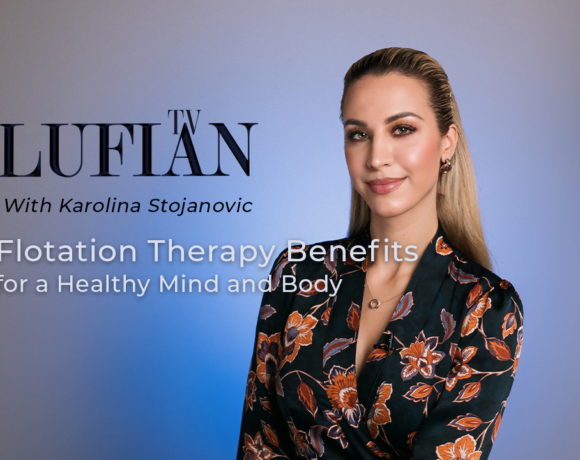
What is float therapy? How can it boost your brainpower, reduce stress, decrease pain, and improve your physical and mental health?
Not only is it a scientifically proven self-care technique, but it is also the newest biohack and health trend. In this video, Karolina Stojanovic, Doctor of Pharmacy and owner of Freeze & Float Spa, explains the benefits of floatation therapy on one’s mind and body and discusses its major advantages.

“We are on a regular basis continuously affected by stimuli from the moment we wake up to the moment we go to bed,” Karolina Stojanovic tells Lufian. “Our brain is constantly in the go-go-go mode. So, float therapy allows your body for 60 minutes to reduce those stimuli, reduce your amygdala and allow your body to go to reparative mode.”

You will discover:

  • Floating can increase cognitive function;
  • It reduces stress and anxiety, as well as improving your sleep;
  • It is proven to improve concentration, creativity, attention and reduce fatigue and depression and much more;
  • What to expect in the tank (and out), how to use it effectively for the greatest benefit physically and mentally;
  • Is floating more effective than meditation?

The benefits of float therapy make it a widely used therapy that has continued to grow in popularity. Like meditation, it does not involve any outside factors like time or gravity. By fully immersing in a body-temperature saline solution (slightly denser than seawater), your brain simply shuts down all non-essential functions like hunger and pain, allowing an opportunity for healing. It’s a great way to help cope with stress, anxiety or sleeplessness and has been known to strengthen the immune system, improve blood circulation and even heal wounds.

Karolina’s background as a Doctor of Pharmacy prepares her to help people deal with life’s challenges. As a former healthcare professional with 15 years of experience, she’s integrating floatation and alternative therapies into mainstream practices at Freeze & Float Spa in Chicago.  With her holistic approach to wellness, floating has become an important method for relaxing, resetting, and feeling energized to tackle all the challenges she faces on a daily basis. The Pharmacist turned entrepreneur views the therapies offered by Freeze & Float Spa more as essential for maintaining a balance between body, mind, and spirit.

Karolina Stojanovic with Lufian
Karolina Stojanovic, Doctor of Pharmacy and owner of Freeze & Float Spa. Photo: Andrii Ivanchenko
If you are looking for a technique that will make you feel relaxed, relieve stress and give your body a chance to heal itself, float therapy is about as good as it gets. It’s one of the most effective ways to scale back on stress and bring yourself into an optimal state of health. The sooner you try it, the sooner you will be on your path toward a better mind and body.
Boost Brainpower

There are many different apps and websites that promise to make you smarter, but they have a lot of limitations. Sometimes they are way too time-consuming, sometimes the content is not challenging enough and sometimes they try to sell you something at the end. Here are five free apps that will actually help you improve your brainpower without making any sort of investment in your pocket or in your time.

You know how you’ve heard about a certain theory that says there is a “critical period” in the first two decades of our lives when we are more receptive to learning? It’s true, but you can still benefit from playing video games for 30 minutes every day at any age. Lumosity is an app that makes it easier for you to do this. You can play almost any game you want without losing your concentration or getting bored. You can also keep track of your progress and watch videos on how to become smarter.

No one can force themselves to study or learn new things without rewarding themselves for their achievements. This is what this app does: it helps you keep track of all your activities and rewards you with points and rewards for your behavior. You can then use the points to buy new clothes, books, or even board games if you want them. The best thing about this app is that it keeps track of everything for you and reminds you when a certain task must be completed by.

“The best way to know the road ahead is to know where you have been.” This quote by Richard Nixon describes the idea behind this app. It’s a bit like a teacher that will help you study for your exams and learn about anatomy in all its glory. The best thing about it is that it also works offline, so no matter where you are, you can train your brain (as well as your eyes).

This app is basically an exam itself. It tests your intelligence and shows you how well you are functioning in various cognitive functions. It’s of great help for those who want to improve their weaknesses. This is a must-have app for anyone who wants to get more out of their own brain.

This one is simply the best thing I’ve seen so far on all of my travels across the internet. It’s an app that teaches you about the most important things in life, like how to play guitar, doodle or draw a portrait of someone. It works better than an actual teacher in the sense that it’s virtual and absolutely free. One could even say that it is more efficient than a real-life tutor or teacher.

Does your smartphone have a game app yet? If not, these five apps will help you study smarter and enhance your mental strength. Go ahead and download them before anyone else gets their hands on them!

*It is not recommended to play games while driving or doing any other type of activity that requires full concentration, as the brain will be distracted and may result in accidents. All information provided herein is for educational purposes only. Please consult a medical practitioner.

Boost Brainpower

What we see and feel is not a reflection of what is happening around us. What we see from the outside is mostly a product of our brain’s processing and how it perceives certain sensations. There are several ways to trick the brain:

  • A special procedure called after Ganzfeld

It was invented in the 30s of the last century and called the soft sensing isolation technique. To carry out the procedure, tune the radio to interference, lie on the couch and stick the halves of table tennis balls on the eyes with adhesive plaster. After a minute, people begin to hear hallucinations. Someone hears a horse running, others hear that the souls of the dead are talking to them. It is our brain that invents its own emotions since it does not receive them from the outside.

  • Pain relief

To reduce the pain from a wound, you can look at it with binoculars in reverse, that is so that it decreases. Scientists from Oxford have proved that if you look at the wounded arm through the other end of the binoculars, it will decrease in size, which means that the pain will be less. This proves the connection between the sensations of pain and vision.

  • The Pinocchio illusion

Take 2 chairs and a blindfold. The subject is blindfolded and sits in the back seat with a glance at the other person in front. A blindfolded person can reach out and put it on the nose in front of the seated person. With his other hand, he touches his nose and rubs it. In a minute, more than half of the people claim that their nose has lengthened.

  • Deception of thinking

For this experiment, you need to raise your right leg low and start moving it clockwise. Simultaneously with this with the index finger of your right hand, draw a six in the air. Your leg will be unable to do anything and will begin to rotate counterclockwise. This is caused by the work of the left hemisphere of the brain, which is inherent in control of the right half of the body, as well as rhythm and synchronization. Because it does not cope with the work of two movements that contradict each other, it will strive to combine them into one.

lufian brain study
Doctors doing medical research on the human brain and testing blood samples.
  • Deception of hearing

This experiment requires 2 observers and 1 test subject. For the experiment, take headphones that are attached to two tubes on both sides. The subject sits on a chair between the observers, keeping an equal distance from them. The observers begin to speak in turn, each in his tube, and the listener determines the direction of the sound. If you swap the tubes and start talking again, the subject will indicate the wrong direction of the sound.

This is due to auditory localization, which is needed to determine the direction of the sound source by a person. Since the human hearing system has limited capabilities in determining the distance of the sound source, an intersonic difference is obtained in time. If you change the tubes, then the neurons on the opposite side of the brain are involved in the work, and the person will incorrectly determine the source of the sound.

  • The illusion of a rubber hand

This experiment was accidentally discovered by psychologists and proved that a person can consider a rubber hand as their own. Take a rubber hand or rubber glove and inflate it. You will also need a piece of cardboard and two paintbrushes. Put the rubber hand in front of you and hide yours behind the cardboard. Let the person helping you start brushing the brushes along with the real and the rubber hand at the same time, and after a few minutes, you will feel that the rubber hand also belongs to you. If at the same time your assistant hits the rubber hand, then you may even feel pain and anxiety.7. People under 20 years old can hear sound with a sine wave with a frequency of 18 thousand Hertz. This fact allows teenagers to use this sound as a ringtone on a mobile phone so that only they can hear this sound. This is because with age, a person begins to hear sounds of high frequency worse.

  • Purkinje effect

This is the name of a scientist who is considered the founder of modern neuroscience. As a child, he studied a special kind of hallucination, which was based on the rapid waving of his hands in front of closed eyes, while looking at the sun. After a couple of minutes, he saw figures of different colors, which were changing all the time and becoming more sophisticated.

On this fact, special glasses were created, which could turn on the light at a certain frequency. Due to the stimulation with light, a short circuit appeared in the visual cortex of the brain, and the cells themselves also lit up peculiarly and formed images.

Boost Brainpower

Why are some people capable of taking challenges head-on while others are not? Why hardships motivate some to pave their way to success but drive others into depression? For years, it was thought that the main reason is simply a different level of intelligence.

But the richest and most influential people are far from the smartest. The key component for success, according to the study, is not the level of intelligence, familiar to us as IQ, but emotional intelligence – EQ (emotional quotient.) This concept means an ability to understand and control emotions, as well as be able to understand other people and their feelings.

Is Emotional Intelligence The Only Key To Success?

EQ was introduced by psychologist Lindsay Gardner in the 90s, but after studying it over the past quarter of a century, scientists have not been able to determine its clear criteria, as was done with IQ.

Nevertheless, some signs do indicate a high level of emotional intelligence:

  • A vast “emotional vocabulary” – that is, the ability to understand your experiences and describe them;
  • A lively interest in people, curiosity and empathy – the ability to put yourself in other people’s place;
  • Openness to change and the ability to adapt to various circumstances;
  • The ability to effortlessly “say no” to yourself and people, which indicates self-control and self-esteem;
  • A desire to share with people new knowledge, unexpected gifts, without expecting anything in return;
  • Gratitude for what you have right now.

There are other features of an emotionally intelligent individual, for example, a habit to observe a work-leisure balance, including having adequate sleep at night, as it improves the intellectual and emotional state.

As you know, people can be generally divided into “right-hemispheric” (with enhanced imaginative thinking, creativity and emotional intelligence) and “left-hemispheric” (goal-oriented and logical thinkers.) It turned out that individuals, whose right hemisphere is more developed, are more likely to get well with people, be flexible and, therefore, become successful.

Why Your Energy Level Matters

However, Paul George Claudel in his book «The Project To Live,» draws attention to another important success factor – VQ (vitality quotient,) which measures how energized a person is: mentally, spiritually and physically. The author believes that the very concept of VQ – the coefficient of vital energy – is the ability to change, inspire and lead.

Photo by Andrea Piacquadio from Pexels

Indeed, people who are unable to control and replenish their energy are not able to achieve high results simply because they are tired. Worn-out leaders might become the catalyzers of professional burnout within their teams, as they fail to provide necessary support and motivation for their employees. Moreover, not only in business but in personal life, VQ is worth paying attention to. Especially at this time, where self-realization comes to the fore during self-preservation.

The quarantine has put the world on pause: industries froze in anticipation, like train cars on a siding. This period gives you a chance to think about life energy – a key resource to your well-being and productivity, as it determines how quickly you complete tasks and how you affect other people.

Ways to Optimize Your Energy

Patricia Goldfrey, American psychologist and integrative coach, offers these simple tips to replenish your energy:

Learn to say “no”

Constantly agreeing to help others when you don’t want to, results in losing your energy by giving it to other people. Luckily, American psychologist, Ellen Hendrickson, has come up with these guilt-free ways for a smooth refusal:

  • Offer an alternative;
  • Explain your inaccessibility by something specific: your schedule or other responsibilities, or feeling unwell;
  • Turn “saying no” into a compliment (e.g. “No, but thank you for thinking about me”.)

Control the surrounding sounds

Unwanted noise can absorb tons of energy. An easy way to quickly change your mood is to create your invigorating playlist or take on the earplugs (depends on a situation.)

Get rid of unnecessary things

According to Trisha, in nine out of ten cases, even quick cleaning up significantly helps to recharge. If you want to free up space in your house or apartment and make it cozier here are some ideas:

  • Throw away old books and magazines;
  • Get rid of unnecessary documents, such as old paid bills;
  • Wipe off dust;
  • Throw away other useless or worthless things;
  • Decorate your room with photos of your happy moments.

Despite the importance of your energy, developing IQ and EQ is also essential, as the presence of energy with a lack of mind can have undesirable consequences. Even the brilliant commander, Napoleon once said: “People with high intelligence and powerful energy become generals, but the ones with an excess of energy and no mind are no good to the society.” Then, probably, it’s not a good idea to avoid gaining new knowledge if you’ve decided to become successful!

The levels of IQ, EQ and VQ are innate properties. However, by setting a specific goal, it’s possible to develop each of those quotients within yourself. By understanding yourself and stimulating your multilateral thinking, you can become a well-rounded person and reach your potential. It is also important to do what you love, as it will increase your intelligence and vitality without trying too hard.

Boost Brainpower

Wondering how to release tension after a stressful day and enhance your intelligence simultaneously? Great, because what you do in your free time can significantly affect the level of productivity, creativity and quality of life overall.

Hobbies are not only remedies for stress relief. There are some types of leisure activities that not only bring pleasure but also boost your brainpower.

Explore fresh ideas from the list below, find an appealing hobby and surprise your brain with a new beneficial habit:

1. Meditation

Photo by Felipe Borges from Pexels

Meditation positively affects the human brain and boosts productivity. Studies have shown that meditation bolsters the prefrontal cortex, the area of the brain that regulates our focus and self-discipline. In other words, regular meditation will assist your brain to work efficiently and make thoughtful decisions on a neurological level. This also means you will learn how to control your own emotions and feelings, thus feel more confident and even happier.


2. Sports

Any kind! The smartest people of all ages devoted a significant part of their time to physical exercises. Socrates was a wrestler, Kant could not live a day without walking a dozen miles in Königberg… Besides, relying on Neuroscience magazine’s experiments on monkeys, the ones who did physical exercises regularly mastered new tasks and performed them twice as fast then the other primates.


Thus, sports improve neural connections in the brain, enhance blood flow and promote productiveness on brain functionality. Of course, you do not have to sign for Thai boxing classes tomorrow, but you could always start jogging in the park nearby. It is convenient and free!


3. Gardening

It is a surprisingly effective and useful hobby for the brain. When you grow vegetables, fruits or flowers, you reduce the level of cortisol, the stress hormone, therefore, your attention and focus are improved. The positive emotions from coming to your garden and enjoying the views of nature or contemplating the results of your work also benefit your brain, making you a happier, and, therefore, a more productive and creative person.


4. Knitting

Experts claim knitting is a great way to deal with anxiety, depression and even chronic pain. The benefits of working with hands can be compared to the effect of meditation. Knitting activates the parasympathetic nervous system and dulls the “hit or run” reaction. Thus, it can help restless people to slow down and finish their work in a shorter time.


5. Playing a Musical Instrument

Many studies have proven that playing a musical instrument enhances creativity and memory, brushes up linguistic skills, fine motor skills and much more. No matter what you are playing, a guitar or a violin, the corpus callosum, connecting the hemispheres, creates new neural connections in the brain. An improvement in the state of this organ entails an increase in the level of executive skills, memory, the ability to solve problems and the functioning of the brain as a whole, regardless of how old you are.


6. Reading

No matter what you read, whether it is a romantic novel or an article in The New York Times, the benefits will be the same. Reading lowers stress levels which makes you more focused and relieved. Assistance in solving problems, forming a single core of knowledge for better daily navigation, identifying relationships, understanding processes, empathy – all these qualities boost by systematic reading.


7. Learning New Languages

The ability to speak multiple languages is advantageous not only in career opportunities but in traveling, understanding foreign cultures and discovering new information without wasting time on Google Translator.
Learning a second language may help you ​​boost concentration on a certain task, as well as protect your memory. It preserves the active mechanism by which knowledge contained in your brain is processed.


8. Chess

Photo by Engin Akyurt from Pexels

The research article about Chinese board-game players showed that chess players have a good memory and learn quickly because they have a highly developed neural network. When playing chess, new brain connections are actively formed: the more of them exist, the faster the information is transmitted. Thus, undoubtedly, such activity positively influences the understanding of speech and coordination and so increases the learning speed. Even an amateur chess player will be able to solve problems of different nature much faster.


9. Dancing

Scientists concluded that dancing positively affects brain performance for people of all ages. It improves the connection between neurons of the cerebral cortex and the hippocampus, which is responsible for the transition of short-term memory to long-term, spatial orientation and retention of attention.


10. Video Games

The regular video games playing develops spatial memory, navigation and visual-spatial skills. Such conclusions were made by American scientists in the article “The Impact of Video Games on Cognitive Activity.” They explored action games such as Call of Duty and found that first-person shooters develop the prefrontal cortex, the right hippocampus and the cerebellum.

However, Aaron Seitz, a professor of psychology at the University of California, believes that cognitive abilities develop only if you play no more than an hour a day. So don’t get too carried away!


Isn’t it amazing to be able to boost your intelligence by doing something fun? The above activities, scientifically proven to be beneficial, can always become your effective brain exercise. If you choose to spend your evenings doing something useful rather than binge-watching Netflix, your brain will thank you sooner or later. And who knows, maybe you will not only diversify your routine but also rediscover your individuality.

Boost Brainpower

Have you ever wondered what makes you feel or behave one way or another? How many times do you feel that you can’t control it? The truth is, it’s all in your brain. If you learn how to control it, you will acquire a powerful skill. You will learn how to control your emotions, understand your behavior and even take advantage of it. 

Lufian made a list of books that will help you learn the structure and functions of your brain. Save the list and discover some psychological tricks that will lead you to success. 


“Making up the Mind: How the Brain Creates Our Mental World” by Chris Frith

The book, written by one of the most outstanding neuroscientists, gives us some insight into why we experience the world the way we do. The author emphasizes how the mental state of a person changes under certain outside circumstances and specific behavioral reactions. If your work activities require a lot of nerve cells,  this book will come in handy. It will also help answer questions about irritability and nervous instability.


Behave: The Biology of Humans at Our Best and Worst” by Robert Sapolsky

The New York Times bestseller, the Best Book of the Year by The Washington Post and The Wall Street Journal.

This acclaimed book raises an important question: why do we behave the way we behave? The author examines the human behavior context with a number of factors. To answer this question, Sapolsky takes a long journey to take a look before any action. Why some people kill, and some do charity? How can people be so kind and so evil at the same time? It’s not enough to look at the brain only. Sapolsky creates a broader picture by encompassing factors such as culture, ecology, and history of humankind. He piles all of that with his captivating storytelling. 


Sort Your Brain Out: Boost Your Performance, Manage Stress and Achieve More” by Jack Lewis and Adrian Webster

Brain scientist Dr. Jack Lewis and motivational speaker Adrian Webster in this book answer the most frequently asked questions about the brain and its activities. Not only can you find the answers to those questions, but learn how to use your brains to your benefit. If you want to manage your stress, improve your memory and creativity, become the master of your mood and your best decisions, Sort Your Brain Out is what you need. 


Delusions of Gender: How Our Minds, Society, and Neurosexism Create Difference” by Cordelia Fine


How often have you heard that men and women are wired differently? The author, Cordelia Fine, explains the complex issue of differences between male and female brains. Rather than saying that there’s such a thing as a “male brain” and a “female brain,” Cordelia Fine digs into cultural assumptions about gender roles and how they modify our brains. In addition, this book has a unique wit that makes science very engaging and easy to read.


“The Brain That Changes Itself: Stories of Personal Triumph from the Frontiers of Brain Science” by Norman Doidge

The author, psychiatrist and psychoanalyst Norman Doidge, M.D., suggests a revolutionary look at the human brain. One of the central things in the book is neuroplasticity which states that brain changes throughout an individual’s life. In the book, you can read real-life examples. For instance, the case of a woman who had half the brain from birth, blind people who learn to see and many other inspiring stories. This book will change the way you look at brains. It’s truly inspiring and moving to see the human’s brain potential.