Boost Brainpower

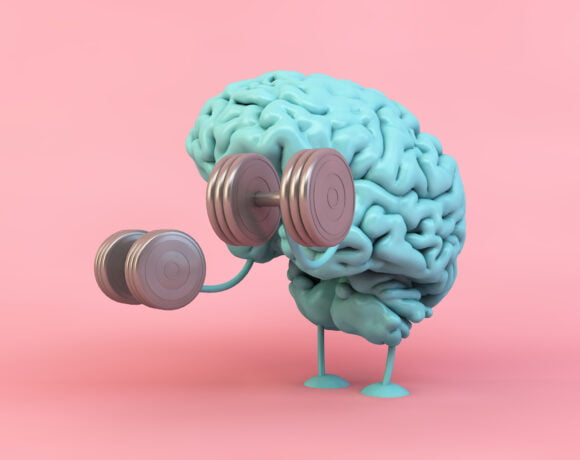
Wondering how to release tension after a stressful day and enhance your intelligence simultaneously? Great, because what you do in your free time can significantly affect the level of productivity, creativity and quality of life overall.

Hobbies are not only remedies for stress relief. There are some types of leisure activities that not only bring pleasure but also boost your brainpower.

Explore fresh ideas from the list below, find an appealing hobby and surprise your brain with a new beneficial habit:

1. Meditation

Photo by Felipe Borges from Pexels

Meditation positively affects the human brain and boosts productivity. Studies have shown that meditation bolsters the prefrontal cortex, the area of the brain that regulates our focus and self-discipline. In other words, regular meditation will assist your brain to work efficiently and make thoughtful decisions on a neurological level. This also means you will learn how to control your own emotions and feelings, thus feel more confident and even happier.


2. Sports

Any kind! The smartest people of all ages devoted a significant part of their time to physical exercises. Socrates was a wrestler, Kant could not live a day without walking a dozen miles in Königberg… Besides, relying on Neuroscience magazine’s experiments on monkeys, the ones who did physical exercises regularly mastered new tasks and performed them twice as fast then the other primates.


Thus, sports improve neural connections in the brain, enhance blood flow and promote productiveness on brain functionality. Of course, you do not have to sign for Thai boxing classes tomorrow, but you could always start jogging in the park nearby. It is convenient and free!


3. Gardening

It is a surprisingly effective and useful hobby for the brain. When you grow vegetables, fruits or flowers, you reduce the level of cortisol, the stress hormone, therefore, your attention and focus are improved. The positive emotions from coming to your garden and enjoying the views of nature or contemplating the results of your work also benefit your brain, making you a happier, and, therefore, a more productive and creative person.


4. Knitting

Experts claim knitting is a great way to deal with anxiety, depression and even chronic pain. The benefits of working with hands can be compared to the effect of meditation. Knitting activates the parasympathetic nervous system and dulls the “hit or run” reaction. Thus, it can help restless people to slow down and finish their work in a shorter time.


5. Playing a Musical Instrument

Many studies have proven that playing a musical instrument enhances creativity and memory, brushes up linguistic skills, fine motor skills and much more. No matter what you are playing, a guitar or a violin, the corpus callosum, connecting the hemispheres, creates new neural connections in the brain. An improvement in the state of this organ entails an increase in the level of executive skills, memory, the ability to solve problems and the functioning of the brain as a whole, regardless of how old you are.


6. Reading

No matter what you read, whether it is a romantic novel or an article in The New York Times, the benefits will be the same. Reading lowers stress levels which makes you more focused and relieved. Assistance in solving problems, forming a single core of knowledge for better daily navigation, identifying relationships, understanding processes, empathy – all these qualities boost by systematic reading.


7. Learning New Languages

The ability to speak multiple languages is advantageous not only in career opportunities but in traveling, understanding foreign cultures and discovering new information without wasting time on Google Translator.
Learning a second language may help you ​​boost concentration on a certain task, as well as protect your memory. It preserves the active mechanism by which knowledge contained in your brain is processed.


8. Chess

Photo by Engin Akyurt from Pexels

The research article about Chinese board-game players showed that chess players have a good memory and learn quickly because they have a highly developed neural network. When playing chess, new brain connections are actively formed: the more of them exist, the faster the information is transmitted. Thus, undoubtedly, such activity positively influences the understanding of speech and coordination and so increases the learning speed. Even an amateur chess player will be able to solve problems of different nature much faster.


9. Dancing

Scientists concluded that dancing positively affects brain performance for people of all ages. It improves the connection between neurons of the cerebral cortex and the hippocampus, which is responsible for the transition of short-term memory to long-term, spatial orientation and retention of attention.


10. Video Games

The regular video games playing develops spatial memory, navigation and visual-spatial skills. Such conclusions were made by American scientists in the article “The Impact of Video Games on Cognitive Activity.” They explored action games such as Call of Duty and found that first-person shooters develop the prefrontal cortex, the right hippocampus and the cerebellum.

However, Aaron Seitz, a professor of psychology at the University of California, believes that cognitive abilities develop only if you play no more than an hour a day. So don’t get too carried away!


Isn’t it amazing to be able to boost your intelligence by doing something fun? The above activities, scientifically proven to be beneficial, can always become your effective brain exercise. If you choose to spend your evenings doing something useful rather than binge-watching Netflix, your brain will thank you sooner or later. And who knows, maybe you will not only diversify your routine but also rediscover your individuality.

Lifestyle & Success
  • Tell me about yourself. What are your career goals for the next 1/5/10 years?

Your task is to describe your experience in a few words, dwell in more detail on the achievements that you have at the moment, and also briefly share your goals for the future.

Tell them what brought you to the interview, what requirements you meet and what efforts you have made for this. Show them how you are guided in your actions. Let the recruiter know how your position is related to your career prospects. Create the basis for moving a regular interview into an effective dialogue format.

  • Why did you choose this position?

Most employers look to hire individuals with critical thinking. It’s in your interest to prepare a good answer here. Make sure they see your enthusiasm and desire to work for their organization.

  • Why did you leave your previous job?

Be positive no matter the circumstances. You should not mention any serious issues with your previous employer or say anything bad about the company and colleagues. Talk about your interest in the new potentials, opportunities and ways to express yourself, etc.

  • What is your work experience and why should we work with you?

In your answer, focus on the responsibilities of the position you are applying for. You should understand how they relate to your skills. If you are lacking some experience, your awareness will play into your hands.

  • How do you think your colleagues and managers would describe you?

If you are struggling to answer instantly, talk to your ex-colleagues or professionals that you know and prepare one or two quotes.

  • What do you know about our company? Why do you want to work for us? Why are you applying for this position?

Make sure you do your research about the organization before the interview. Find as many details about its history as possible. How has it been growing? What are its current struggles? Who are its partners? Who are the competitors? Explain how you support the company’s mission and try to connect your answer with your skills and goals.

  • What salary do you expect?

Honestly, it’s a provocative question and a complicated game that you are likely to lose if you answer first. Consider the possible experience that you can get as the main reward. Or ask about the salary range of someone with your education/experience/skillset in that position. You can also say that it depends on the details of the job. Ask if it is possible to discuss this question at a later stage of the interview so that you fully understand your responsibilities.

  • Give some examples of your ability to improvise.

Companies look for innovative thinkers who don’t need to be babysat. They want professionals with creative thinking who work independently and can solve any assigned tasks in almost any environment. Prepare the answer to this question in advance. 

  • Tell me about how you managed to help the team focus on the goal and lead to success.

You are a team player, right? Be prepared to share stories about how you supported colleagues at difficult times and promoted their professional growth.

  • Do you apply for other vacancies?

Be honest, but don’t spend a lot of time answering. Focus on this interview and what you can do for this organization.

  • Have you ever been fired?

And again, be honest. But at the same time, be brief and avoid negative statements about yourself, about other people or about any organization.

  • What are your strengths? Tell me about how, with their help, you managed to smooth out the difference between failure and success?

Some good examples: the ability to prioritize, the ability to work under stressful conditions, leadership skills, reporting skills, etc. The main thing is to sound truthful.

  • Describe the person with whom you would refuse to work together.

Do not be trivial. This may be a lack of loyalty of a colleague to the organization and employees, his criminal behavior, manifestations of cruelty and violence. Minor objections will not play into your hands. Focus on discussing your ability to work well with almost everyone.

  • Have you ever thought about how you can improve working conditions in the organization?

They want to see that you are capable of:

1) be responsible enough to think about these kinds of improvements;

2) think creatively and challenge existing norms;

3) use emotional intelligence, working on improvements, including for other employees;

4) take into account the risks of changes.

  • Have you had any problems with your trainer/supervisor?

This is a trap, and you will fall into it if you start criticizing someone. Say that you did not have any problems or tell a short story about how you constructively worked to solve the problem and as a result strengthened your relationship.

  • What motivates you to give all your best? Or: What do you expect from your employer?

This is personal – be precise and honest. Examples include challenges, conditions for success, recognition, help to others. In the case of expectations, you can say about clear directions, thanks to which you can strive for better results. Add whatever you think is appropriate.

  • What are your weaknesses? Tell us about things that you are not good at.

Focus on professional growth. When discussing weaknesses, always say “but.” For example: “In the past, I made too many commitments, and it put a lot of pressure on me, but I overcame it because over time my skills got better.”

  • Describe the case when you had to analyze several options for the development of events and make the right, informed decision.

This question is being asked to discover strategic thinking abilities in you. Tell a story about a difficult situation, give detailed information about the pros and cons of the situation, about the sources of information obtained, about the information collected in general and about the conclusions made in order to come to a certain conclusion.

  • What helps you to remain a collected person? How do you put your affairs in order?

Planning requires certain skills. Talk about how you prioritize, for example, while working, what methods and tools you use. Tell them how your attention to detail at some point in your life led you to success.

  • Do you have any questions?

Prepare about 5 questions to gather the information you need to make an informed decision. These questions should allow you to better understand the position, as well as warm-up your interest in working in the company.